Silas Beckett, On-Chain Critic & Market Columnist
July 17, 2026 · 15 min read
NFT minting platform choice: why convenience often kills floor price
A collection can sell out in six minutes, flood the secondary market in sixty, and spend the next six months pretending the problem was “market conditions.” Usually, the market conditions were…
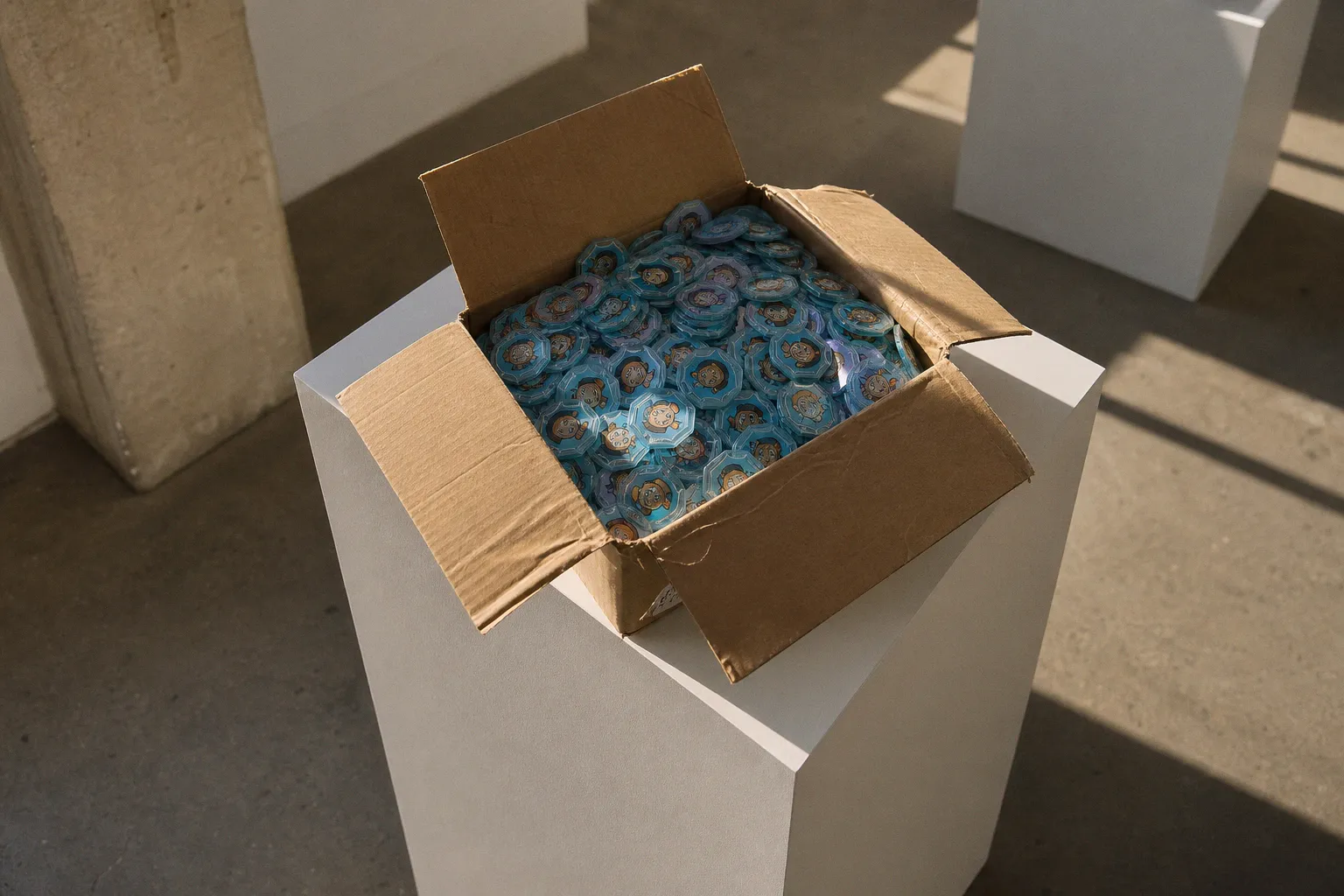
A collection can sell out in six minutes, flood the secondary market in sixty, and spend the next six months pretending the problem was “market conditions.” Usually, the market conditions were visible before the contract went live: too much supply unlocked at once, no meaningful wallet filtering, identical allocations for mercenaries and believers, and a public mint designed like a checkout page rather than a distribution event.
The uncomfortable truth is that an NFT minting platform does not directly set a floor price. The floor is simply the cheapest listed asset in a collection, not an appraisal and certainly not a promise. Sustainable secondary volume does far more work than the logo on the mint page. But platform choice shapes the controls behind the launch: supply release, eligibility, allocation, timing, bot resistance, contract ownership, payment rails, and fee configuration. Those are not cosmetic settings. They decide who gets the inventory and how urgently they need to sell it.
That is where convenience earns its bad reputation. Not because a no-code launchpad is inherently poison, but because convenience invites lazy economic design. The platform removes friction for the creator, then the creator removes every remaining friction for the flipper.
The myth of platform-driven floor prices
Discord loves a clean villain. “We used the wrong platform.” “The contract was too standard.” “Collectors can tell it was a template.” Sometimes that sentiment contains a signal. More often, it is post-mint grief looking for a technical scapegoat.
A generic mint page does not automatically erase cultural premium. Plenty of respected artists have used standardized infrastructure because they wanted dependable checkout, familiar wallet flows, and less time debugging Solidity at 3 a.m. A custom smart contract, meanwhile, can be a monument to vanity: expensive, poorly audited, impossible to index cleanly, and packed with mechanics nobody asked for.
The market does not reward bespoke code merely because it is bespoke. It rewards credible scarcity, coherent provenance, compelling art, and a holder base with reasons to remain holders.
Still, the custom smart contract vs platform decision matters because it determines what you can credibly control—and what you can later change. That distinction is where the real market conversation begins.
A turnkey platform may offer fast deployment and polished UX, but it can also normalize a dangerous default: every collection gets the same launch rhythm, the same access pattern, the same shallow reveal logic, the same frantic public window. When collectors see five drops configured from the same template in a week, the technology is not necessarily devalued. The cultural signal is.
The market reads repetition quickly. If the art, metadata structure, mint mechanics, and distribution logic all feel interchangeable, buyers begin treating the NFT as interchangeable inventory. That is not snobbery. That is liquidity behavior.
A mint platform does not “kill” a floor. It can hand the supply to people whose only business model is killing it.
The distinction is essential. We should stop confusing technical convenience with demand creation. A low-friction mint can increase participation; it cannot manufacture durable conviction. A sellout is a transaction event. A healthy floor requires an actual secondary market after the applause has stopped.
The anatomy of a launch is really the anatomy of distribution
Every drop has an audience story in Discord and a distribution story on-chain. The first is full of role screenshots, heart reactions, and “community first.” The second is visible in wallet concentration, mint timing, transfer behavior, and listing velocity.
Those two stories are often not friends.
A strong launch does not necessarily exclude flippers. Flippers provide liquidity, and liquidity is not a dirty word. But a drop becomes structurally fragile when its allocation mechanics select almost exclusively for speed, capital, or automation. If the largest chunk of supply lands in wallets that planned their exit before metadata revealed, the floor does not need a bear market to fail. It only needs Tuesday.
This is why mint guards deserve more attention than launch-page aesthetics. On Solana, Metaplex Core Candy Machine documentation describes more than 23 composable guards across payment rules, timings, allowlists, and bot protection. That is a serious design surface. It lets a creator decide whether access is based on wallets, tokens, NFT ownership, time windows, payment assets, or combinations of those conditions.
The tool is neutral. The configuration is not.
Manifold’s phased structure makes the point cleanly. A creator can run:
1. A free allowlist phase, rewarding a defined wallet group with access before the crowd arrives.
2. A discounted allowlist phase, opening a larger but still controlled cohort at a lower mint price.
3. A public phase at the original price, allowing open demand to absorb the remaining supply.
Those phases are sequential in that setup, not simultaneous. That is useful because it forces a decision: who gets the earliest access, how much inventory they receive, and what the public is actually buying into.
The bad version is familiar. A project announces a “community mint,” gives hundreds or thousands of wallets equal allocations without disclosing selection logic, leaves a large public tranche open, and prices the mint below any plausible secondary demand. It then acts surprised when every wallet lists at the same psychological level: slightly above mint, just enough to cover gas and keep the exit green.
The better version is not simply “more exclusive.” Exclusivity without legitimacy is just gated extraction. The goal is to match allocation with the kind of ownership the collection needs.
| Launch decision | Convenience-first configuration | Market-aware configuration |
|---|---|---|
| Allowlist | Broad, opaque wallet dump | Disclosed eligibility and allocation caps |
| Per-wallet limit | High cap to ensure sellout | Cap matched to collector depth and supply |
| Public mint | Large first-come, first-served inventory | Calibrated release after early cohorts |
| Pricing | Discounted to force velocity | Priced against demonstrated demand, not vanity |
| Supply changes | Editable without clear disclosure | Fixed terms or explicitly disclosed flexibility |
| Bot handling | Assumed to be solved by the front end | Contract-level rules and realistic monitoring |
A white-label NFT minting solution can give a creator a professional surface in a day. Fine. But white-label mechanics should not mean white-label thinking. If every decision remains editable until the final minute—supply, price, access, timing—collectors are not buying into a defined launch. They are buying into an operator’s discretion.
That matters because credibility is part of the asset.
Manifold, for example, documents that an Edition Page claim can be edited after an allowlist period to remove the allowlist requirement and open remaining supply to the public. That flexibility can be useful. A stalled edition does not need to die because the original access plan missed. But it must be disclosed. If early collectors think they minted scarce access and later discover that the gate was merely a temporary marketing layer, the project has created avoidable resentment. On-chain provenance is durable. So is the memory of a bait-and-switch.
“Fair mint” is often a gas war wearing good UX
The phrase “fair launch” gets abused so routinely that it should come with a warning label.
A first-come, first-served Ethereum mint may be equal in theory. In practice, it privileges wallets that can react fastest, run automation, tolerate failed transactions, and bid aggressively for inclusion. The interface can be elegant. The backend can be no-code. None of that changes blockspace.
Under EIP-1559, an Ethereum transaction includes a base fee plus a priority fee. When blocks exceed the gas target, the base fee rises. During a hot mint, validators have an obvious economic incentive to prioritize transactions offering higher tips. That competition occurs at the network level, not inside the mint website’s brand identity.
So when a launchpad claims to “avoid gas wars,” read the fine print in your head. It may reduce user error. It may stage access. It may offer a queue, signature gating, or an allowlist. These are valuable tools. But a polished mint page cannot repeal congestion.
The real question is whether the drop architecture turns demand into productive distribution or destructive fee competition.
A crowded public mint with low per-wallet caps can look fair. It can also produce hundreds of failed attempts, a pile of wasted transaction fees, and a community that begins its holder journey angry at the project. Worse, gas-war winners are often not emotionally attached collectors. They are specialists in extracting underpriced inventory from chaotic mechanics.
I have little patience for teams that call this “organic.” It is not organic. It is a choice to outsource allocation to blockspace auctions.
There are cleaner ways to handle demand:
- Use staged access windows when there is a real existing community to reward. Do not invent scarcity by handing out roles indiscriminately for engagement farming.
- Set per-wallet caps that reflect the collection’s goals. A one-per-wallet cap can widen ownership, but it can also create sybil incentives. A higher cap can consolidate conviction, but it can also concentrate exit risk. Neither setting is morally pure.
- Choose payment rules deliberately. Solana tooling can accommodate SOL, SPL tokens, or NFT-based requirements. Those options can reinforce an ecosystem, but they can also turn access into a speculative side quest.
- Disclose the remaining public supply. Mystery inventory is not always mysterious in a good way. Buyers need to understand whether they are minting into a controlled edition or an endlessly adjustable funnel.
- Treat bot protection as a distribution tool, not a marketing badge. Bots are not defeated because a landing page uses the word “secure.” Enforcement lives in the actual mint logic.
If demand exceeds capacity, somebody pays: the buyer in gas, the creator in goodwill, or the floor in immediate sell pressure.
There is no frictionless high-demand Ethereum mint. There are only decisions about where the friction lands.
The floor is written after mint, not during it
The mint is the opening auction. The floor is the aftermath.
This is where teams make their most expensive conceptual mistake: they treat mint mechanics as the whole market. They watch the supply counter hit zero, celebrate volume, and assume a liquid secondary market will materialize by default. It will not.
Research covering 875,389 Ethereum art-NFT sales found that liquidity and trade volume were strong predictors of NFT prices. That should not be controversial. A collection with actual two-way trade, buyers beneath the floor, and holders who are not all rushing toward the exit has better price formation than one with a single heroic listing and a desert below it.
But even liquidity can deceive. Wash trading can manufacture volume. Incentive programs can create circular transactions. A collection can show impressive turnover while the real buyer base remains thin. We need to look past the dashboard theater:
- Are unique wallets accumulating, or are the same clusters recycling assets?
- Is volume concentrated around one rare trait, while the common floor has no bids?
- Are listings gradually distributed, or is there a synchronized wall just above mint?
- Does the collection have a meaningful holder base beyond the initial allowlist?
- Are transfer patterns suggesting collectors moving assets, or wallets preparing inventory for sale?
A floor price is especially fragile when it rests on restricted supply without organic bid depth. The cheapest listing can be held aloft by one stubborn owner. That is not strength. It is a screenshot.
Secondary-market fees add another layer of noise. OpenSea’s platform fee moved to 1.0% across chains in September 2025, while creator fees are not a universal, automatically enforced constant across marketplace flows. This matters more than many creators admit. They will debate NFT minting fees down to the last decimal at primary sale, then ignore the economics that shape trading afterward.
The platform’s initial fee, the contract’s royalty configuration, and the marketplace’s eventual enforcement are different variables. Treating them as one number is amateur hour.
For artists, creator fees can fund continued work. For PFP teams, they can fund operations—assuming there is an actual operating plan rather than a vague promise of “utility.” For traders, fees affect the threshold at which a flip makes sense. If a collection’s entire post-mint thesis depends on quick turnover, every point of friction changes behavior.
That does not mean “lower royalties equals better floor.” Cheap trading does not produce cultural relevance. It simply lowers the cost of moving inventory. If the only thing supporting the floor is easier flipping, the project has already confessed its weakness.
No-code launchpads are not the problem. Undifferentiated launches are.
There is a strange status game around no-code tools. Some teams treat them as beneath serious builders. Others use them as a substitute for having a launch thesis. Both positions are lazy.
A no-code NFT launchpad is often exactly what a small artist or lean team needs. It can reduce deployment risk, provide battle-tested mint flows, simplify allowlists, and remove the cost of building infrastructure that will not make the artwork better. Smart contracts are not sacred objects. They are machinery.
The problem begins when the machinery dictates the collection rather than serving it.
If a platform only makes it easy to run a broad allowlist, a discount phase, and a public mint, creators may force their project into that mold because the buttons are there. This is creator platform limitation in its most common form: not a hard technical ceiling, but a narrowing of imagination.
A project built around intimate collector relationships might need a smaller edition, a slower claim period, and a carefully documented eligibility snapshot. A generative PFP collection with broad cultural ambitions might need a staged release across regions and wallets, paired with a transparent policy for unminted supply. An established artist with a serious collector base may need no public mint at all. Forcing every one of these into the same “Discord grind, whitelist, public scramble” pattern is operationally easy and culturally bankrupt.
The custom-contract route becomes justified when the work genuinely requires unusual logic or stronger guarantees: novel reveal mechanics, nonstandard provenance, collector-specific permissions, immutable supply behavior, dynamic metadata tied to meaningful on-chain events, or a distribution model a generic platform cannot express without manual intervention.
But “custom” is not a magic word. It adds audit risk, maintenance burden, and the chance that a project creates cleverness where collectors wanted clarity. The best contract is not the most exotic one. It is the one whose rules are legible before capital arrives.
I will take a standard contract with fixed, well-explained mechanics over a bespoke mess with a cinematic roadmap every time.
Design for the holder base you want, not the sellout screenshot you crave
The sharpest launch teams begin with a question most creators avoid: who is likely to own this asset two weeks after mint?
Not who will mint. Own.
That answer should shape the supply, price, access rules, and public allocation. A project aiming for a deep collector base should not distribute half its inventory through shallow, engagement-farmed whitelist spots. A project with a high mint price should not pretend that a weak public market will become strong because the art is “premium.” A project with a huge supply should not rely on artificial scarcity language.
There is no universal safe mint price. No blessed supply cap. No eternal royalty percentage. Anyone selling you one is selling a template, not analysis.
What we can do is align the moving parts:
1. Make access criteria intelligible. Wallet allowlists are not inherently fair. They can reward early support, prior collectors, ecosystem participation, or nothing more than the ability to win a raffle. State the criteria. State the cap. State what happens to unused inventory.
2. Separate community reward from inventory distribution. A free claim can be a thank-you. It becomes a floor problem when it releases a large block of zero-cost inventory into a market with weak demand.
3. Price against demand evidence, not Discord temperature. Emoji reactions are noise. Wallet behavior, prior release performance, collector retention, and credible interest from outside the project’s own server are closer to signal.
4. Define what remains mutable. Can the team change supply? Extend the mint? remove the gate? alter metadata? The answer does not need to be “no” in every case. It needs to be visible.
5. Plan the secondary market before launch. Not by promising price support—never that—but by understanding marketplace fees, royalty settings, metadata reliability, collection verification, and the actual path by which buyers will discover the work after mint day.
This is the part where we, as a market, need to stop rewarding performative complexity. A beautiful collection with clear distribution rules has a better chance than a generic PFP with a “revolutionary” contract nobody can explain without a thread.
Convenience is not the enemy. Convenience without conviction is.
The NFT minting platform is a control surface, not a floor-price machine. It can help a team ration access, defend a launch from obvious bot extraction, preserve clarity around supply, and build cleaner provenance. It can also make it dangerously easy to deploy another interchangeable drop, optimized for a sellout and structurally prepared for capitulation.
My verdict is blunt: choose the platform that lets your distribution match your thesis, then publish the rules as if your most skeptical future holder is reading them—because they will be. The mint page is temporary. The on-chain record, the holder base, and the floor’s ugly honesty are not.