Silas Beckett, On-Chain Critic & Market Columnist
June 26, 2026 · 9 min read
Revoke Active OpenSea Approvals to Stop Wallet Drains
On-chain forensics tell a consistent story across the major drain events of the last two years: the wallets that get hit are rarely the sloppy newcomers running hot keys from a Chromebook. They're the high-value dormant ones.
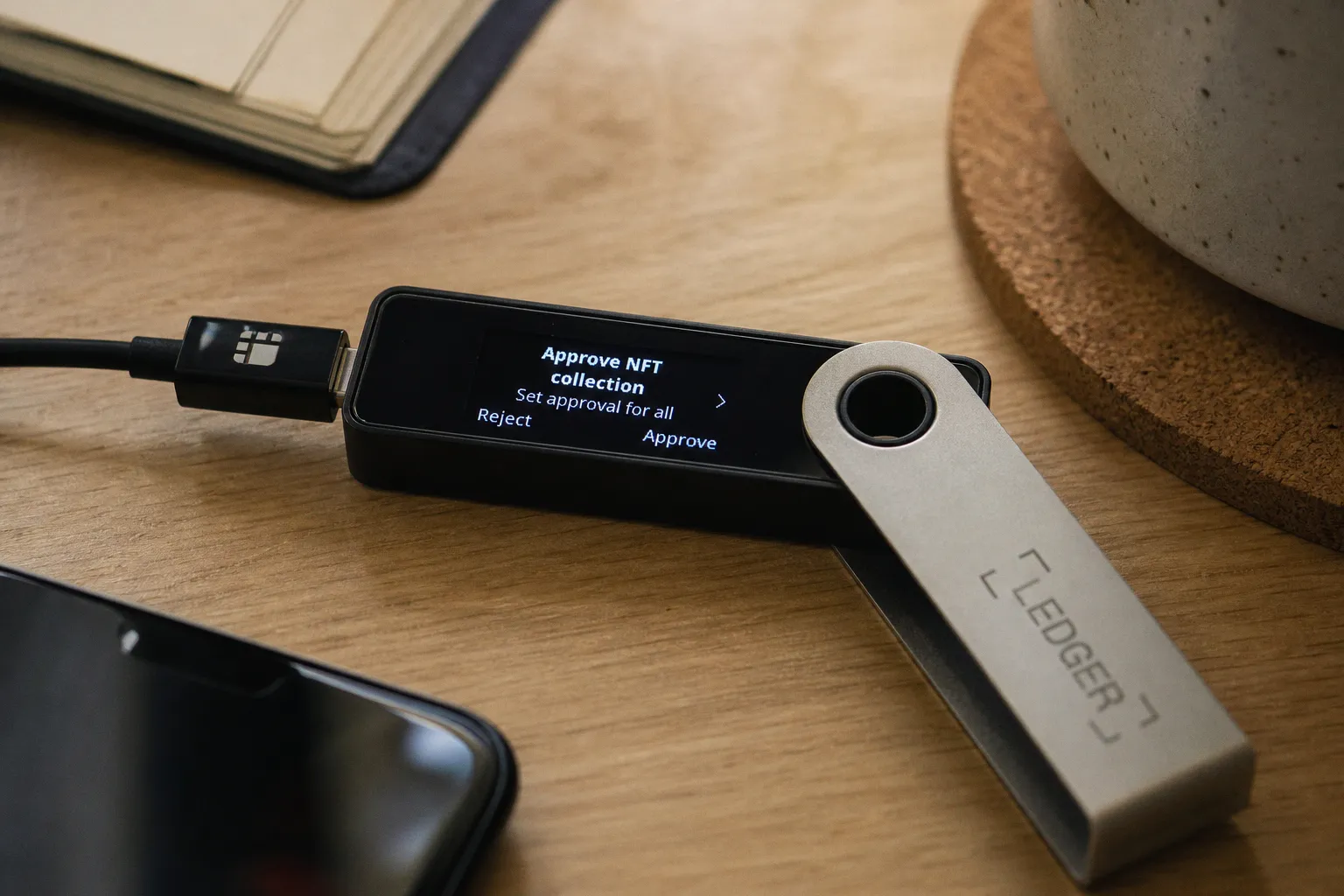
If you trade on OpenSea, your wallet is almost certainly carrying the same dead weight. The only open question is how many contracts you still trust and whether that trust is still warranted. This is not a philosophical exercise. It's a wallet-hygiene drill that the NFT discourse has decided to treat as beneath its dignity. The drains keep happening.
Most "hacks" in NFT space are not exploits of code. They are exploits of forgotten permissions.
What 'Set Approval For All' Actually Does
When OpenSea (formerly Wyvern, now Seaport) lists your NFT for sale, the protocol needs permission to transfer the token on your behalf once a buyer settles. Rather than request a fresh signature per listing — which would mean a MetaMask popup for every bid, every cancellation, every relist — the protocol leans on a convenience function baked into the ERC-721 and ERC-1155 standards: setApprovalForAll.
In plain English, you're handing the marketplace contract a master key to every NFT you hold in a specific collection. Not the one you're listing. All of them. The approval persists until you explicitly revoke it. There is no automatic expiration.
This isn't a bug. It's a UX choice that prioritized listing friction over wallet security, and for most of the 2021–2022 cycle it was treated as background noise. The proxy contract pattern OpenSea evolved into compounded the issue. Many users are sitting on layered approvals across the original Wyvern contract, the newer Seaport contract, and the long tail of third-party marketplace routers that piggybacked on OpenSea's early dominance. Each one is a live vector.
The cultural translation: every "I approve OpenSea to move my BAYC" you ever clicked is still active right now. If you don't believe that, go check.
How Malicious Contracts Exploit Idle Approvals
The exploit pattern is brutally simple. That simplicity is exactly why it keeps working.
An attacker — or a sloppy, hijacked, or compromised marketplace contract — calls transferFrom on behalf of the approved operator. The token contract checks the approval, finds it valid, and executes the transfer. No second signature. No MetaMask popup. No warning window. The asset is gone before the next block lands.
Phishing kits know this, and the most effective ones in 2023 and 2024 weren't after seed phrases. They were after setApprovalForAll payloads disguised as mint confirmations, allowlist registrations, or "gasless" airdrop claims. Once the signature lands, the user typically notices nothing until they refresh OpenSea and find their PFP absent.
I want to be precise here, because the on-chain forensics produce a consistent target profile. The compromised wallets are disproportionately the high-value dormant ones. A wallet that flips punk derivatives every weekend, sweeps bids at 3 AM, and rotates hot wallets quarterly rarely gets hit. A wallet that bid on a handful of pieces in 2022 and then went silent? That's the profile. The longer an approval sits idle, the more invisible it becomes — and the more likely its owner is to forget what they signed, and to whom. Dormant approvals are not neutral. They are deferred attack surface.
Dormant approvals are not neutral. They are deferred attack surface.
Auditing Your Wallet: Etherscan vs. Revoke.cash vs. OpenSea Native
Three tools handle this audit. They are not equivalent, and the right answer is "use at least two."
| Tool | Method | What It Surfaces | View Cost | Revoke Cost |
|---|---|---|---|---|
| Etherscan Token Approval tool | Paste wallet address into a read-only checker | Direct token allowances — ERC-20 and ERC-721 operator approvals | Free | Gas only |
| Revoke.cash | Connect wallet or paste address | Same allowances plus historical dApp interactions, bulk revoke flow, flagged spenders | Free | Gas per approval |
| OpenSea account settings (native) | Settings → Security → Permissions | Only approvals OpenSea's own contracts requested | Free | Gas per approval |
The Etherscan and Revoke.cash paths are the heavy hitters. They surface every active operator approval on a given address — including the ones you've forgotten about. Older Wyvern allowances. Third-party marketplace routers that shut down but never had their approvals cleared. Suspicious airdrop-claim contracts. Staking protocols you stopped using. Revoke.cash in particular has become the de facto standard because it batches revocations efficiently and tags known-malicious spenders before you sign anything.
OpenSea's native revocation path is the laziest option, and laziness has its uses — but understand its scope. It handles Seaport-era approvals and OpenSea-controlled proxy contracts. It does not surface approvals you granted to Blur, Magic Eden, X2Y2, LooksRare, or any of the aggregator routers that emerged during the post-FTX marketplace war. If you traded across multiple venues during that era — and if you were active, you did — the native tool alone leaves you blind.
The workflow I run:
1. Open Revoke.cash. Connect your wallet or paste your address. Read every line in the results panel.
2. For each high-value collection holding (BAYC, Azuki, Pudgy, Doodles, Art Blocks Curated, anything sitting in the vault), confirm whether an open operator approval exists. If yes, revoke.
3. Cross-reference with Etherscan's Token Approval tool. The two views occasionally disagree on edge cases — wallets with nonce quirks, factory-proxied contracts, a few LP positions that tokenized NFT exposure. If Etherscan shows something Revoke.cash misses, revoke it manually.
4. Treat the OpenSea native settings page as a quarterly touch-up, not a primary audit. Don't trust it as your only line of sight.
The Gas Question Nobody Wants to Answer Honestly
Yes, revoking requires a transaction. Yes, you pay gas. On Ethereum mainnet during congestion spikes, a single revocation has cost users north of $30 in some recent windows. On Polygon and other L2s, the cost is usually sub-dollar. The reflex is to dismiss the expense as an operational tax and let the approvals ride.
That math doesn't hold.
Set your gas cost against the floor value of the assets you're protecting. A $30 revoke against a wallet holding a Bored Ape at current floor is a rounding error. A $30 revoke against a wallet holding twelve Art Blocks pieces, two of which have accrued cultural premium over the last eighteen months, is the cheapest insurance premium you've ever paid. The "I'll do it when gas is lower" posture is the same posture that produces the drains I described in the lede — the owner told himself the same thing for fifteen months. Gas eventually got cheap. It didn't matter. The approval was still sitting there waiting.
Two operational rules I follow and recommend:
- Revoke after every batch of trading activity, not once a year. If you listed three pieces on Blur for a speculative sweep last weekend, revoke those approvals once the dust settles. The longer they sit, the more likely you are to forget.
- Tie the reminder to an event, not a date. "Revoke approvals after every airdrop claim season" works better than "revoke approvals on the 15th of each month" because the event is a concrete behavioral anchor your future self will actually remember.
The Cultural Blind Spot — Why Collectors Ignore This
Here's the part I find genuinely frustrating, the part the floor-price Discords refuse to discuss.
The same people who will spend an hour arguing over a 0.05 ETH spread between Seaport and Blend will not spend ten minutes auditing their operator approvals. They'll debate provenance charts. They'll attribute cultural premium to specific 1/1 artists. They'll agonize over whether a PFP collection is "asymmetric." And they'll leave Wyvern-era approvals active on a wallet holding six figures in ETH-denominated jpegs.
This is not a knowledge gap. The information has been in OpenSea's help docs, in Etherscan's blog, on Revoke.cash's homepage, and in every credible security write-up for the better part of three years. It's a priority gap. Operational security lives below the status hierarchy of the NFT discourse. Nobody gets Discord alpha by tweeting about revoking allowances. Nobody gets a follow-back from a major collector by posting a thread on gas-efficient batch revocations. So the work doesn't get done, the approvals accumulate, and the drains happen on schedule.
I'd rather be correct than popular on this. Revoke your approvals. Do it today, before you close this tab.
Periodic Maintenance Is Not Optional
One last clarification, because the messaging around this gets fuzzy and vendors have a habit of making security sound like a one-time checkbox.
Revoking approvals is not a one-time fix. The moment you interact with a new marketplace, sign an airdrop claim, use an aggregator, or list on a venue you haven't used before, you've granted a fresh operator approval. The hygiene cycle resets every time your wallet touches a new contract. The known-malicious-contract list expands as new exploits get reverse-engineered on-chain. Staying current with Web3 threat reporting helps keep your mental model sharp — nothing replaces actually checking, but staying informed about emerging phishing patterns shortens the lag between a new campaign going live and your ability to recognize it.
Treat approval auditing the way you treat a hot wallet rotation: scheduled, non-negotiable, and tied to specific behavioral triggers rather than calendar dates. The cost is gas plus ten minutes of attention. The alternative is opening your wallet one morning and finding the jpegs you spent two years accumulating quietly withdrawn to an address you don't recognize.
That tradeoff is not complicated. Stop optimizing for listing speed and start optimizing for what happens to your wallet six, twelve, twenty-four months from now. The market rewards patient bidders and disciplined sellers. It also rewards patient approvers. Stay sharp, stay ruthless about your own permissions, and remember: the boring hygiene work is the work that keeps the vault intact.