Sotheby’s Glitch Auction Elevates Generative Art Beyond Surface Aesthetics
Sotheby’s says its latest digital-art auction, Glitch: Beyond Binary, brings together historical glitch art and contemporary generative NFT works built around software errors as an aesthetic choice. That is the headline; the market signal is more interesting.
Silas Beckett, On-Chain Critic & Market Columnist·updated July 22, 2026
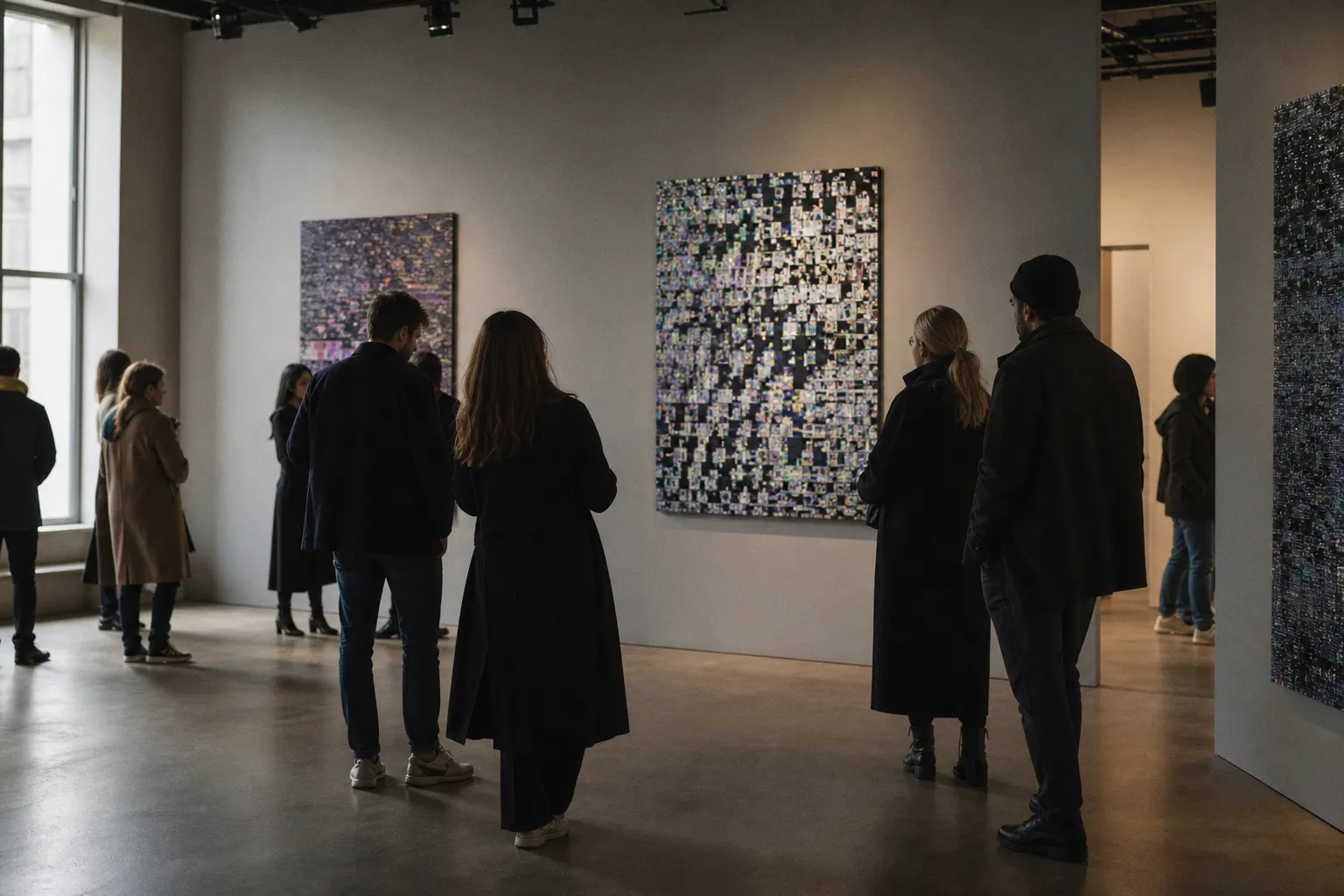
A major auction house is framing the malfunction not as a bug to be cleaned from the metadata, but as a cultural premium to be examined.
For collectors who have spent years watching “generative” become a catch-all label, this matters. The sale puts a specific visual and technical lineage under one roof: intentional error, system fracture, and code behaving in ways that resist the polished-output default.
The glitch is the provenance, not decoration
There is a familiar trap here. Once an aesthetic gets institutional attention, the market starts minting surface-level copies: chromatic aberration, corrupted JPEG textures, fake scan lines—noise pretending to be a thesis.
Sotheby’s framing is narrower and better. These are works using software errors as an aesthetic choice, alongside historical glitch art. That distinction should force buyers to look past the thumbnail. We should be asking whether the error is integral to the work’s process, whether the generative system actually produces its visual tension, and whether the metadata and provenance support that story.
In digital art, the mechanism is often the medium. If the “glitch” can be removed without changing the work’s meaning, it may be styling. If it exposes the logic, limits, or instability of the system, it has a stronger claim to cultural weight. I would not pay a provenance premium for static distortion alone.
A wider institutional bid for coded art
The timing is not isolated. Art Blocks has just released Hekatē by Aranda\Lasch through its Curated program, describing a project at the intersection of modular architecture and generative coding, with algorithmic structures producing complex 3D-rendered digital sculptures.
Meanwhile, Christie’s says its Trespassing sale concluded with strong sales for digital artists including Beeple and Mad Dog Jones, highlighting the overlap between street-art aesthetics and blockchain-based fine art. Different visual languages, same underlying movement: coded work is being presented less as a speculative side room and more as a medium with its own art-historical categories.
That does not erase liquidity risk. It does make lazy comparisons less useful. We are not looking at one monolithic “NFT art” market. A glitch-driven work, an architectural generative sculpture, and a high-profile blockchain-native artist can all sit under the digital-art banner while attracting entirely different collectors, narratives, and holding behavior.
What to watch before the noise becomes a floor
The practical move is not to chase every corrupted-looking output that appears after a Sotheby’s headline. Track the artist’s relationship to the process. Read the project description closely. Inspect how the work is rendered, what the algorithm does, and whether the claimed error is genuinely embedded in the piece rather than pasted over it.
This is the same curatorial problem we see elsewhere in digital media: presentation can package an audience before it proves substance—much like a curated streaming hub for younger viewers organizes attention before any single title earns devotion.
Glitch: Beyond Binary is a useful institutional signal, not a blanket buy thesis. Sotheby’s is validating a conversation around error, code, and digital-art history. The market’s job now is the less glamorous one: separate intentional systems from decorative noise.