Beyond Zeroes & Ones: 59A London Announces Sculpture Garden Proving Data is a Creative Force
Physical sculpture born from raw economic and behavioral datasets. That's the pitch from 59A London, who open their Sculpture Garden today — July 9, 2026 — and the timing is almost too tidy: a moment…
Silas Beckett, On-Chain Critic & Market Columnist·updated July 09, 2026
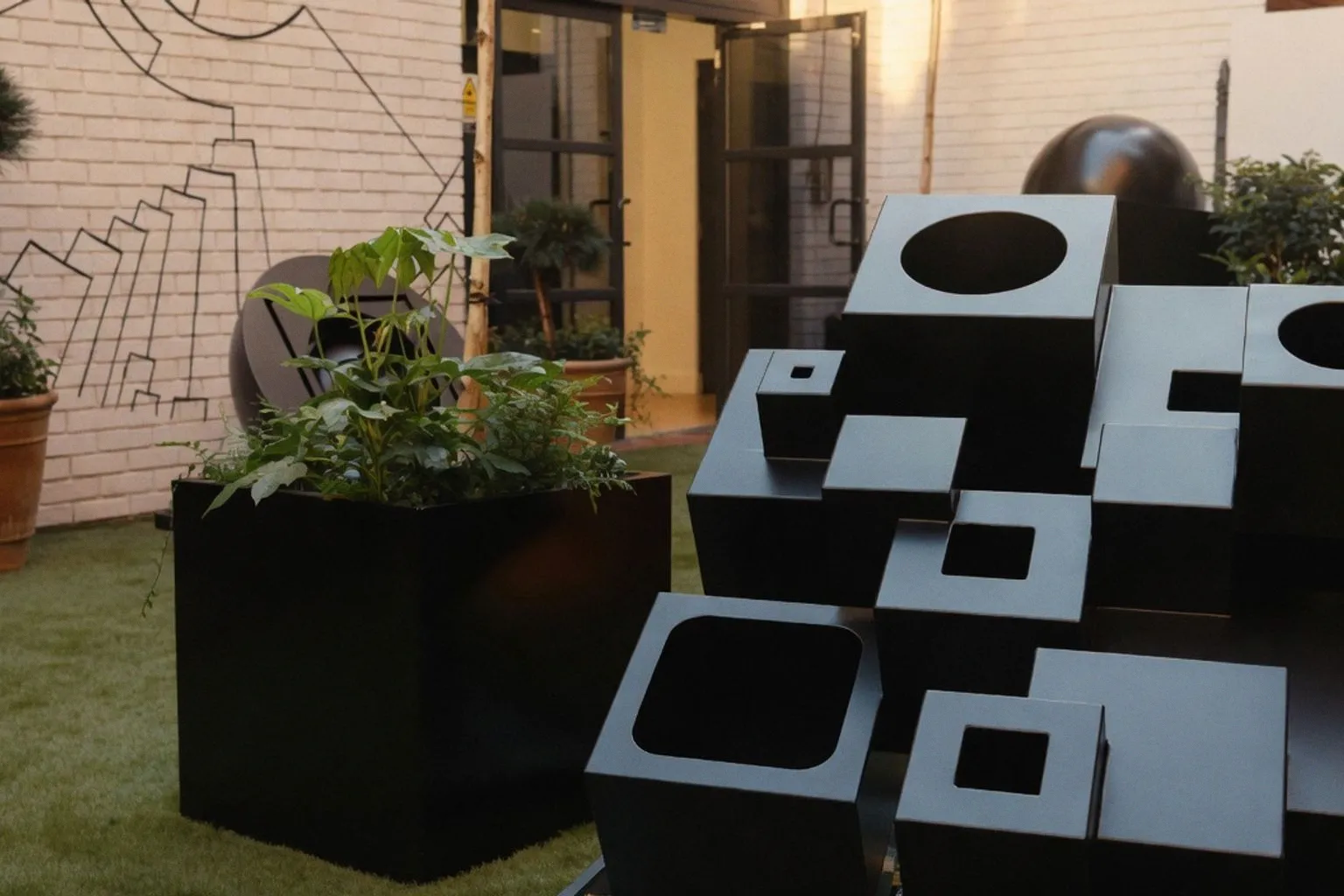
Physical sculpture born from raw economic and behavioral datasets. That's the pitch from 59A London, who open their Sculpture Garden today — July 9, 2026 — and the timing is almost too tidy: a moment when most "data art" lives behind a loading spinner, and somebody decided to pour it into something you can stand next to. Five monument installations. Real numbers. Real geometry. No NFTs in sight, which, paradoxically, makes the whole exercise more honest than half the drops I've covered this year.
The Installations: When Spreadsheets Become Stone
Five pieces, five datasets. Economic, behavioral, geographical — the standard 59A taxonomy, repackaged for a public gallery floor rather than a pitch deck. The studio's framing is consistent with everything they've built: data isn't a byproduct, it's a substrate. Founder Adam Ray put it plainly — "we look at data and see an endless ocean of potential" — and that's the kind of line that would sound hollow coming from a Web3 thread, but lands differently when there's a physical object behind it.
This is the move worth noticing. The crypto-native crowd has spent four years treating on-chain data as something to screenshot, meme, and repackage into a Punk derivative. 59A skips the screen entirely. The data still does the talking, but the medium is bronze and steel, not JPEG. There's a quiet insult in that for every PFP project whose entire "art" thesis is a 24-by-24 image of a different hat.
The Lineage and the Real Tell
59A has been building toward this for years. The 2022 Art Gallery Takeover, the 2024 Machine Ambassador to the United Nations framework, and now a 2026 children's book called The Story of the Invisible Machine — this is a studio that thinks in decades, not mint cycles. After today's opening, the Sculpture Garden transitions into a fully open, public community space. No whitelist. No mint pass. No secondary fee skim. You show up, you look at the work.
That's the part most Web3 projects structurally can't replicate. You can't slap provenance on-chain when the art is bolted to a London gallery floor. Which raises an uncomfortable question for the floor-price crowd to sit with: if data is genuinely the medium, why does the entire space assume the delivery mechanism has to be a token? The algorithmic crowd is busy running the inverse play — turning market behavior into structured signals, increasingly through tools that let anyone automate a strategy without writing a single line of code. Both directions are valid. Neither needs to pretend the other doesn't exist.
What I'm Watching
A physical gallery with no on-chain component won't move ETH volume. It wasn't built to. What I'm tracking is whether 59A's data-as-substrate thesis starts bleeding back into the NFT discourse — specifically, whether any of the more serious generative platforms start treating their datasets as composition rather than decoration. The market signal isn't in the bronze. It's in whether anyone notices the philosophy.