There’s New Money in Old Masters
London's Classics Week just cleared $101.6 million across Christie's and Sotheby's evening sales — a 9.4% lift on last year — and roughly a fifth of the Sotheby's Old Masters bidders had never stepped foot in the room before.
Silas Beckett, On-Chain Critic & Market Columnist·updated July 04, 2026
The "Zeroes-and-Ones" Crowd Doesn't Stay Dead
The fresh capital flooding Old Masters isn't old money's grandchildren. Advisor Evan Beard, who spent the week guaranteeing works at Christie's £38.9 million ($51.4 million) Tuesday evening sale, put a name on them for Artnet News: "a new breed of collectors from a zeroes-and-ones background." Translation — the tech-rich who bid JPEGs into the ceiling in 2021, swore off digital after the bubble popped, and have now quietly circled back into the art market through a category that predates the concept of "collection" by three centuries.
Sotheby's reports around 20% of buyers at its Old Masters evening sale were new to the house and nearly a quarter of the lots went to collectors new to the field entirely. Christie's wasn't specific but a spokesperson noted "new bidders and buyers across the sales on Tuesday." These aren't hedge funds doing tax-loss harvesting. Beard's framing is sharper — and frankly more flattering to the wallet — "non-economic buyers" filling a very specific gap in their collection. That's a vocabulary no honest PFP trader has ever deployed about a Discord-minted profile pic. They've thought about it. They just couldn't afford the phrase without a flip-and-dump thesis attached.
The Stack Old Masters Already Has
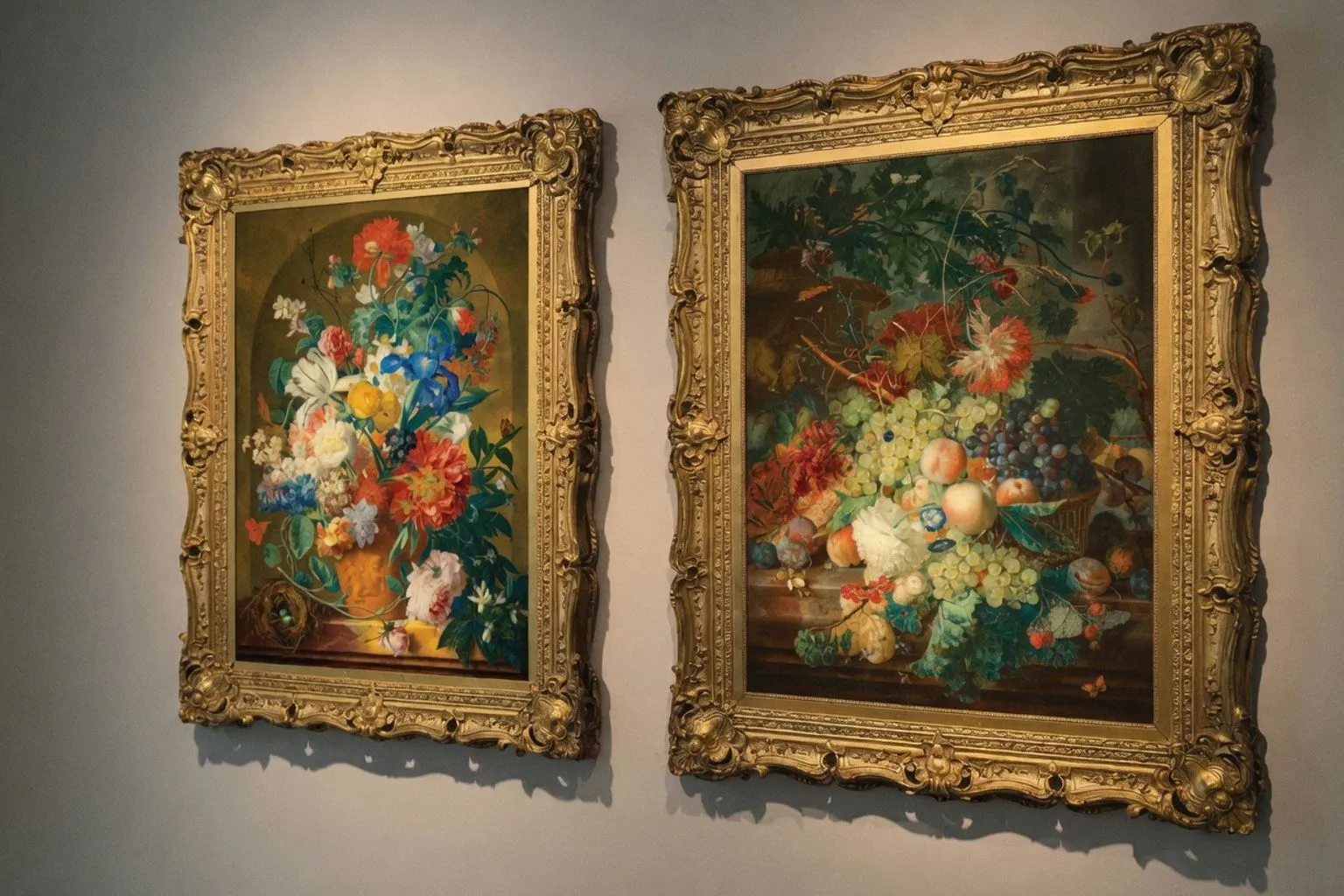
Jan van Huysum set back-to-back records at Christie's on Tuesday. A still life of peaches and grapes — undated — sold for £6.52 million ($8.65 million) against a £3-4M estimate. Its 1734 companion, a floral bouquet, hit £5.54 million ($7.35 million) against a £2.5-3.5M estimate. Six records in a single evening, and these were Dutch Golden Age works the average NFT trader couldn't spell. Sotheby's added a footnote on Wednesday: an 1817 Laocoön bronze cleared £13.6 million ($18.1 million) — the priciest Neoclassical sculpture ever sold at auction — against a £2 million low estimate.
The interesting part isn't any of these prices. It's that the bidding wars ran on a stack Old Masters has had forever and digital art keeps trying to fake with on-chain receipts: material provenance, institutional appetite, scarcity enforced by centuries rather than smart contracts. You cannot JPEG a Van Huysum into existence. Supply is genuinely thin — many works are locked in institutional collections or simply lost to time — which is exactly the demand differential that "the best and the rest" pricing requires. Beard's "non-economic buyers" are paying a cultural premium, not a floor-premium. The two behave nothing alike.
What I'm Tracking
If this week's new-buyer numbers are structural rather than seasonal, the read for PFP liquidity is unfriendly. Capital chasing object permanence doesn't ping-pong back to a floor that exists primarily because three wallets agreed in Discord last week. Watch whether Sotheby's keeps reporting 20%-plus new entries into adjacent categories at the next high-end week. Watch whether Christie's publishes the percent — they'd be the first to brag if it held.
The signal here isn't the $101.6 million. It's that the same herd we tracked from ICOs to DeFi summer to profile pics hasn't actually left the art market. They just changed the asset. Sober up accordingly.