Classic memes that have sold as NFTs
Mashable just published a retrospective on the classic meme canon's on-chain exits, and the numbers deserve a second look beyond the nostalgia haze.
Silas Beckett, On-Chain Critic & Market Columnist·updated July 07, 2026
Provenance as the Real Product
The early web was a permissionless distribution machine with zero royalty rails. Creators uploaded, memes propagated, and the cultural surplus got vacuumed up by platforms, ad networks, and engagement metrics. NFTs didn't invent provenance — they just made it scarce enough to price.
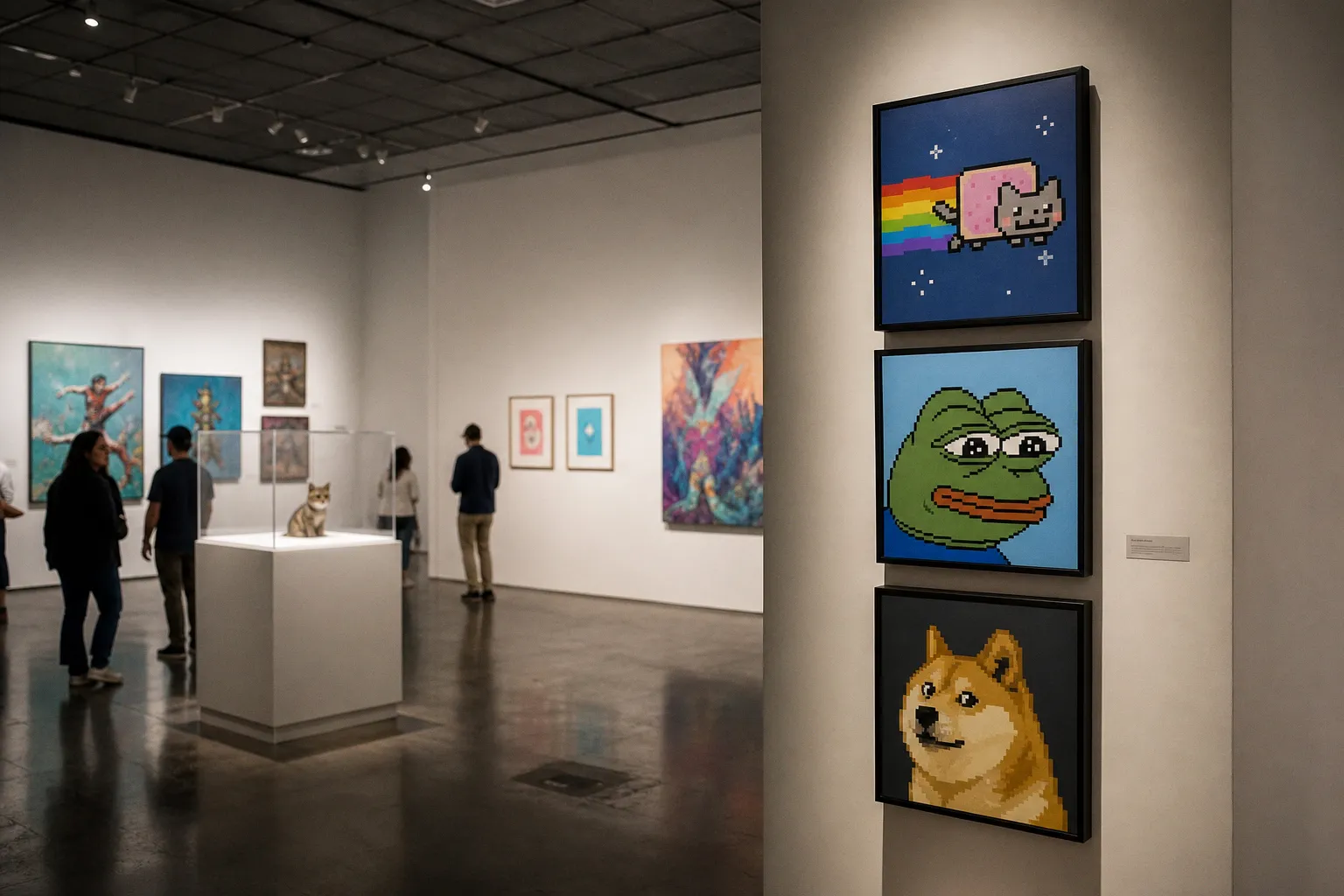
The Mashable roundup makes the asymmetry impossible to ignore. Doge, a 2010 photograph of a Shiba Inu named Kabosu, cleared roughly $4 million in Ethereum in June 2021. Disaster Girl — Zoë Roth's smirking house-fire tableau — went for about $500K that May. Overly Attached Girlfriend (Laina Morris) pulled ~$411K in April. Even the B-tier canon printed: Bad Luck Brian at $36K in March, the Scumbag Steve "1,000-yard stare" at $57K, Success Kid at 15 ETH (~$32,355.75), Leave Britney Alone at $41K in April. Nyan Cat, a flying rainbow Pop-Tart cat, somehow hit $590K.
What I keep coming back to: these are images with verifiable origin stories, not derivative PFP slop. Each one carries a decade-plus of cultural memory baked into the metadata. That is the floor the rest of the market keeps failing to clear.
What the Bids Were Actually Pricing
Strip away the hype and these sales share three mechanics. One: singular authorship. Zoë Roth is both the face and the photographer. The Kabosu image had a single identifiable rights-holder. When the creator and the meme subject collapse into one person, the provenance dispute disappears — and bids climb.
Two: cultural compression. These aren't just images, they're units of shared vocabulary. "Ouch, Charlie." Disaster Girl's smirk. Doge's Comic Sans. The buyer isn't purchasing a JPEG; they're purchasing a compression layer on a decade of reference. That's why a 12-frame animation like Nyan Cat cleared $590K. The cultural weight dwarfs the asset's complexity by orders of magnitude.
Three: timing plus exit. Most of these sales clustered March–May 2021, peak NFT mania. Charlie Bit My Finger went for $760,999 in May and the original video was pulled from YouTube permanently. The token didn't just represent the file — it represented the retirement of the free version. Scarcity by takedown.
What I'm Actually Watching
The uncomfortable signal: none of these tokens have meaningfully cleared their 2021 marks on the secondary market. Most sit in deep-cold wallets or were never flipped at all. The original creators monetized the cultural premium once, and the bid side walked away. Whether this whole category was a one-cycle liquidity event — or a thesis that deserved a longer runway — is a question I'd rather not answer out loud yet.
For anyone minting today: take the lesson. If your asset doesn't have verifiable origin, compression-worthy reference, and a story that survives a decade, you're minting noise, not signal. The meme canon cleared nine figures because they were early to culture, not early to Web3. That edge doesn't transfer.