Damien Hirst and Saturday's work series focus
Damien Hirst is back in the feed not because of a fresh spectacle, but because the market keeps orbiting the same machine: series, recognizability, repeatable formats.
Silas Beckett, On-Chain Critic & Market Columnist·updated July 06, 2026
The signal is not novelty — it is persistence
Hirst remains one of contemporary art’s most recognizable names, and the useful point here is not whether he has reinvented himself this week. According to the available AD HOC NEWS material, there is no newly verified exhibition, auction, award, or fair date inside the recent window covered by that report. In other words: no fireworks. No grand reveal. Just the market continuing to parse the body of work.
That is exactly why this is worth watching.
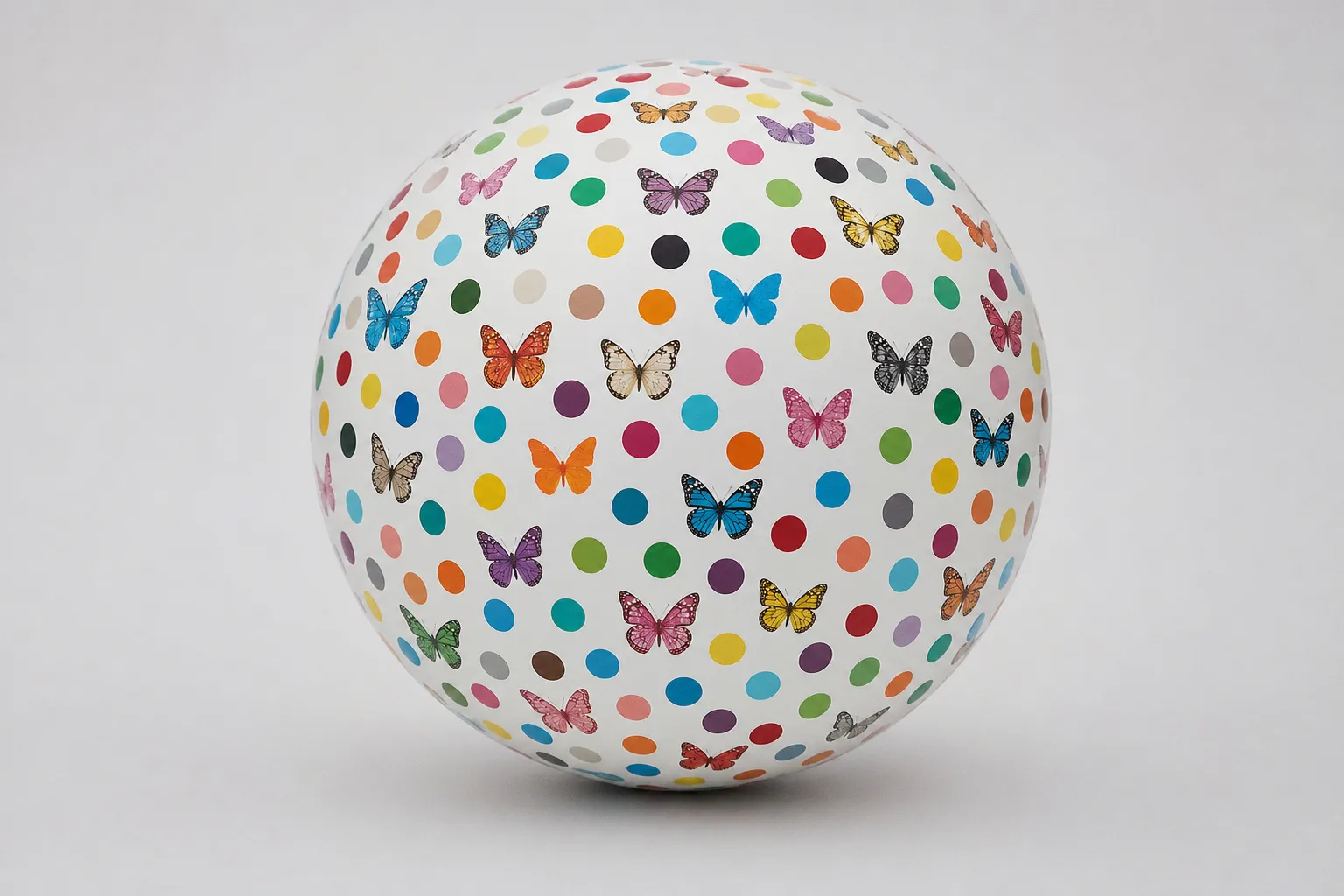
Hirst’s practice is built around repeatable image families and formal systems: Spot Paintings, Spin Paintings, Butterfly Paintings, and the Natural History vitrines are identified as central reference points. The market can understand them quickly. Curators can place them. Collectors can explain them without needing a prayer circle in Discord.
That is the part NFT traders should not ignore. We spend too much time pretending every new mechanic is alpha, when the older art market keeps showing the same brutal truth: durable value often attaches to systems people can recognize, verify, and re-contextualize.
Not every repetition is lazy. Sometimes repetition is the metadata.
Why the series model still bites
Hirst’s market identity, as described by AD HOC NEWS, is tied to high visibility, repeated auction attention, scale, branding, and edition logic. Strip out the marble-floor vocabulary and this starts sounding painfully familiar to anyone who has watched a PFP floor survive — or collapse.
The strongest collections in digital art tend to have a clear grammar. Not just “rare traits,” but a visual and conceptual structure that can hold across many works. Hirst’s long-running groups operate in that zone: recognizable modules, serial production, stark presentation, recurring motifs. The source frames this consistency of format as one of the most important details in how his practice stays legible across museums and the market.
That is the real cross-market lesson. Provenance is not enough if the work cannot be read. Scarcity is not enough if the series has no spine. A famous name is not enough if the output fragments into noise.
The Artsy listing for Nür Jahān (H2-10) The Empress from 2022 adds another small data point: individual works from newer Hirst-related production continue to surface in marketplace contexts. The snippet does not provide sale terms, pricing, or outcome, so we should not pretend it tells us demand. It tells us visibility. And visibility, in blue-chip contemporary art, is part of the machinery.
What NFT collectors should actually check
The practical move is not to chase the nearest Hirst headline and slap “institutional validation” on it. That is lazy liquidity theater.
Instead, use this as a checklist for digital and generative art positions. Does the collection have a repeatable visual language? Can a single work be placed within a broader series without a 900-word lore dump? Is the edition logic coherent, or is it just supply wearing a velvet jacket? Does the market understand the difference between a core work group and peripheral output?
Hirst’s durable groups keep circulating because they are easy to identify and hard to confuse with another artist’s language. That is a cold, useful benchmark. In NFT terms: if the provenance is clean but the aesthetic signal is weak, you are holding a receipt with vibes attached.
My read is simple. This is not a catalyst. It is a mirror. Hirst’s market keeps reminding us that the strongest art systems do not need constant novelty to stay relevant — they need recognizable structure, cultural memory, and enough market repetition to make the signal stick.