Modern exhibition design blends digital art with science learning experiences
A Ming Dynasty exhibition just opened in Beijing with a twist that should make every on-chain collector pay attention: it's bundling physical artifacts with digital collectibles and interactive digital twin displays.
Silas Beckett, On-Chain Critic & Market Columnist·updated July 11, 2026
The Setup
The "World Heritage Splendor, Cultural Renaissance" exhibition launched July 4 at the Ming Tombs Visitor Center as part of the Ming Dynasty Culture Forum 2026, running for one month. The headline piece is "Five Crowns United" — five royal crowns unearthed from Dingling, displayed simultaneously through physical artifacts paired with digital restoration technology. A second section, "Five Mausoleums," pulls representative pieces from imperial mausoleums across China.
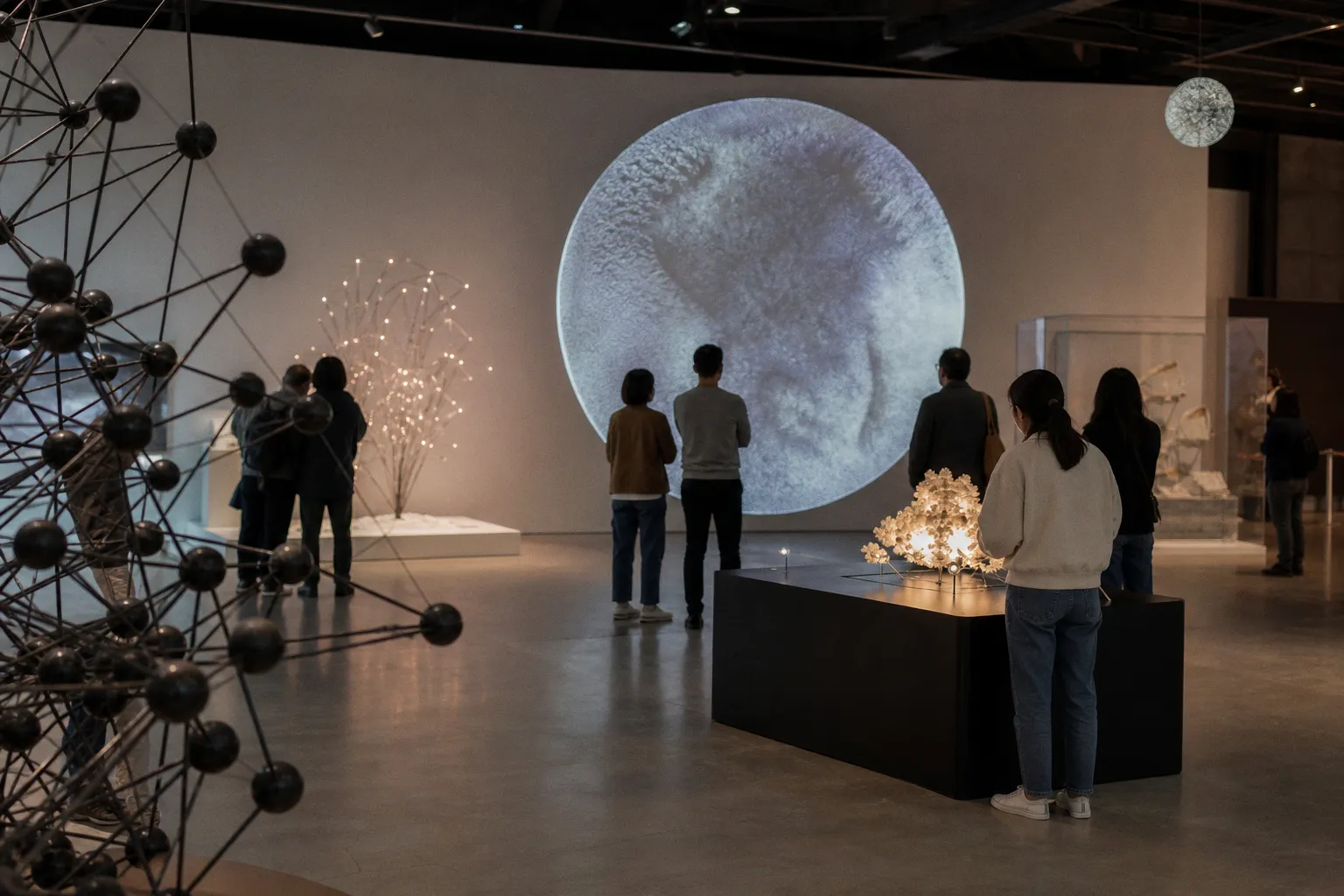
What separates this from a standard museum show is the tech stack underneath: 3D scanning, digital twin replicas, animated crown demonstrations, and interactive touchscreen inquiry systems. Visitors don't just look at Ming imperial regalia — they engage with digitized versions of it.
Where the On-Chain Signal Actually Lives
Here's the part that matters for us. The exhibition is releasing "complementary cultural and creative products, integrated with digital collectibles, available both online and offline simultaneously." Read that twice. A state-backed cultural institution is explicitly framing physical artifacts and digital collectibles as a single distribution channel.
This is the cultural premium thesis playing out in real time, except instead of a hyped PFP drop, it's a 600-year-old crown. The mechanics are identical: provenance, scarcity, digital twin ownership, and a secondary market waiting to form. The question isn't whether institutional cultural bodies will mint — they're already doing it. The question is whether these digital collectibles trade on secondary markets with real liquidity, or whether they sit in custodial wallets as promotional tokens.
What I'm Watching
Two signals. First, whether any of these digital collectibles end up on verifiable secondary marketplaces with transparent floor data. State-issued cultural NFTs have launched before — China's own moves in this space are well documented — but most have been ceremonial, not liquid. This batch has stronger institutional backing across six museums, which raises the floor on credibility.
Second, the metadata layer. When the Palace Museum is involved and the artifacts are tied to 3D scans of authenticated Ming relics, the provenance story writes itself. That's a moat most PFP projects would kill for. If the cultural institutions treat these as genuine digital collectibles with on-chain provenance rather than souvenir QR codes, we're looking at a new category of institutionally-backed digital asset — and the floor price dynamics will be nothing like what Discord-native collections are used to.
The noise right now is floor price capitulation on mid-tier PFPs. The signal is that heritage institutions just normalized digital collectible issuance at scale. Don't confuse the two.