Silas Beckett, On-Chain Critic & Market Columnist
July 12, 2026 · 15 min read
Pudgy Penguins NFT collection: more than just cute JPEGs?
The cleanest contradiction in NFTs is sitting inside a fat little bird: the Pudgy Penguins NFT collection began as 8,888 Ethereum PFPs in July 2021, then survived the exact kind of founder drama that…
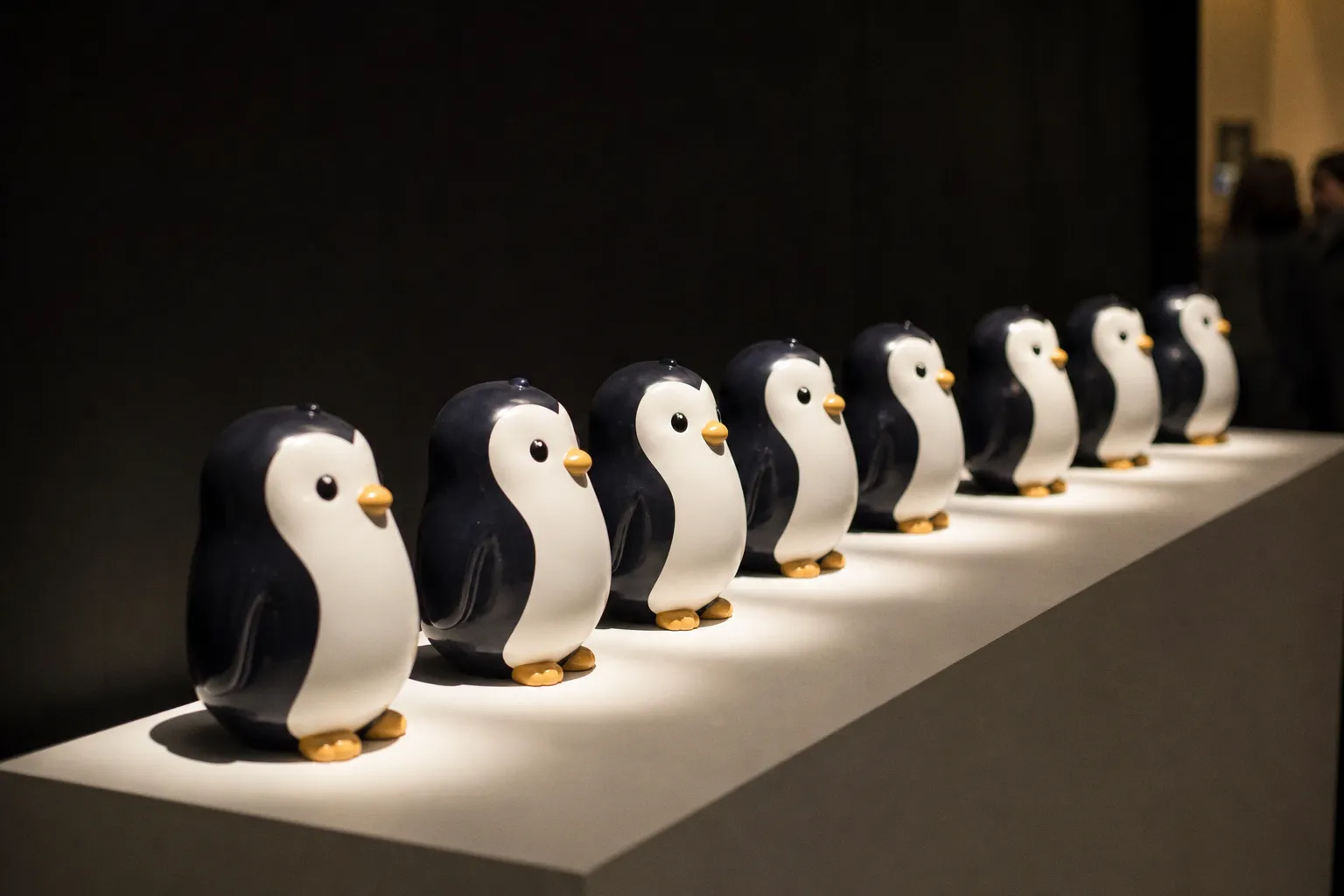
The cleanest contradiction in NFTs is sitting inside a fat little bird: the Pudgy Penguins NFT collection began as 8,888 Ethereum PFPs in July 2021, then survived the exact kind of founder drama that usually turns a Discord into a crime scene and a floor into wet cardboard. Most collections do not come back from that. They decay into nostalgia, thin bids, and “GM” replies from bagholders pretending culture is liquidity.
Pudgy did something rarer. It became legible outside crypto. Not theoretically. Not in a “soon, bro” roadmap deck. In Walmart aisles. On Amazon. As plushies and collectibles with a real retail footprint, a licensing model, and a brand strategy that does not require your aunt to understand MetaMask before she buys the penguin.
That is the reason the Pudgy Penguins conversation matters. Not because cute PFPs suddenly discovered capitalism. Because this is one of the few post-2021 avatar collections that has tried to answer the hard question: what happens after the mint money is gone?
The 2022 pivot: from community crisis to corporate turnaround
Let’s not launder the history. Pudgy Penguins was not born as a polished consumer IP machine. It launched in July 2021 as a 8,888-supply Ethereum PFP collection, riding the same wave that turned cartoon animals into balance-sheet assets and Discord roles into social capital. The art worked. The meme worked. The community had heat.
Then the usual rot appeared: dissatisfaction with the original founders, a frustrated holder base, and the creeping realization that vibe alone does not operate a business. In the PFP market, that is where most projects enter the long hospice phase. The floor price becomes a referendum on trust, and trust is a thin market when execution disappears.
The key rupture came in April 2022, when Luca Netz acquired the Pudgy Penguins project for 750 ETH, roughly $2.5 million at the time. That number matters because it was not just a purchase price. It was a public mark-to-market on the belief that an NFT collection could be rescued as a brand, not merely traded as a chart.
We have seen plenty of “new leadership” stories in NFTs. Most are cosmetic. A new website, a refreshed roadmap, a few spaces, maybe some merch that arrives late and fits like a cardboard tube. Pudgy’s pivot was different because it attacked the central weakness of PFP collections: the gap between on-chain provenance and off-chain relevance.
On-chain, the collection had the ingredients traders recognize:
- Fixed supply: 8,888 NFTs, a clean number for scarcity narratives.
- Ethereum provenance: still the chain where status assets are priced with the most conviction.
- Visual cohesion: round, soft, instantly readable avatars that compress well into profile pictures.
- Community memory: a holder base that lived through capitulation and therefore had something stronger than launch-week euphoria.
- A redemption arc: markets love pain when it is followed by execution.
But none of that guarantees escape velocity. A collection can have provenance and still die politely. What changed was the business thesis. Pudgy stopped acting like the endpoint was the PFP and started treating the PFP as source IP.
The JPEG was not the product. It was the seed asset. That distinction is where most avatar collections still lose the plot.
This is where the Discord sentiment versus on-chain reality split gets interesting. In a typical PFP downturn, holders ask for utility, but what they often mean is “please create reasons for someone else to buy my bag higher.” Token-gated chats, allowlists, vague partnerships — noise. Pudgy’s move into physical merchandise created a different signal. It did not make every penguin more liquid overnight. It did not magically solve floor volatility. But it gave the collection a consumer-facing surface area that was not dependent on NFT-native buyers.
That is a major shift. The average floor price watcher lives inside a closed loop: bids, listings, sweeps, whale wallets, Blur farming, OpenSea offers, social sentiment. Pudgy widened the loop. Now the brand could be encountered by someone who had no idea what a floor price was. That does not automatically pump the collection. But it gives the IP oxygen outside the casino.
Pudgy Toys and the retail strategy hiding in plain sight
The launch of Pudgy Toys was the line in the snow. Physical plushies and collectibles are not glamorous to crypto natives who still want every asset to come with an emissions schedule and a governance token. Good. Glamour is usually where margin goes to die.
Pudgy Toys entered major retail channels including Walmart and Amazon, with Walmart distribution reported across more than 2,000 retail locations. That matters because shelf space is not a Discord announcement. Retail buyers do not care about your lore thread. They care about packaging, pricing, logistics, sell-through, brand safety, and whether a parent can understand the thing in six seconds while a child is pulling on their sleeve.
This is the part NFT traders tend to underprice because it does not show up neatly in a floor chart. A toy on a Walmart shelf does not equal immediate bid depth on an Ethereum collection. But it does test something more durable: can the brand survive contact with normal people?
Here is the brutal comparison.
| Dimension | Typical PFP merch drop | Pudgy Toys retail strategy |
|---|---|---|
| Audience | Existing holders and crypto followers | Mainstream shoppers, kids, families, collectors |
| Distribution | Project website, limited window, crypto social traffic | Walmart, Amazon, broad retail placement |
| Brand test | Can holders be monetized again? | Can non-crypto consumers care at all? |
| Utility layer | Usually a hoodie and a tracking number | Physical toy tied to digital experience via Pudgy World |
| Market signal | Short-term community morale | Off-chain demand discovery |
The Pudgy Toys Walmart push also reframes “utility.” In NFT land, utility became a garbage drawer word. It can mean access, staking, IP rights, events, token claims, alpha groups, merch discounts, or a promise that someday your avatar will walk around a game no one asked for. When everything is utility, nothing is.
Pudgy’s version is more concrete: a physical product connected to a digital experience. A child can own a plush. A collector can scan or interact with a broader brand universe. A holder can see their NFT’s traits potentially extended through licensing. The chain is still there, but it is not screaming at the customer.
That restraint is important. Crypto has a bad habit of forcing infrastructure into the foreground. Normal users do not wake up wanting to “engage with blockchain primitives.” They want an object, an identity, a game, a collectible, a story, a status signal. The rails should disappear.
If Pudgy Penguins has a real shot at becoming more than a cyclical NFT trade, it is because it understands that the penguin must work as a character before it works as an asset.
IP licensing: the holder dream, with adult-sized caveats
The Pudgy Penguins IP licensing model is one of the more serious pieces of the project. NFT holders are granted IP rights tied to their specific penguin likeness, and the project has built a structure where certain holder-owned penguins can be licensed for use in physical merchandise, with royalties flowing back to those holders.
This is not trivial. It converts the PFP from a passive collectible into a potential commercial identity. Potential is doing a lot of work there.
The cynical read is easy: “Great, another NFT project promising passive income.” That would be too lazy, even for me. The more accurate read is that IP licensing introduces a differentiated value layer, but it is uneven by design. Not every penguin will be equally marketable. Traits matter. Visual appeal matters. Brand fit matters. Licensing demand matters. The penguin with the right look for a toy line or package design may have a different commercial profile than one that is rare in a metadata table but visually awkward.
This is where traders and brand operators often talk past each other. Traders fetishize rarity. Retail cares about recognition, charm, and repeatability. A rare trait can be market signal on-chain and dead weight on a shelf.
The real question is whether IP rights can create persistent cultural premium. Cultural premium is not the same as floor price. Floor price is the cheapest exit someone is willing to offer today. Cultural premium is the reason buyers keep forming a bid over years, even after hype cycles reset. CryptoPunks has it through historical provenance. Bored Ape Yacht Club had it through social capital and celebrity-era attention, though that premium has been stress-tested hard. Pudgy is attempting to build it through character IP and consumer products.
The upside is obvious: holders are not merely spectators to a centralized brand machine. The collection’s characters can, in select cases, become part of the commercial surface area. That aligns the mythology of ownership with actual brand activity.
The caveat is just as obvious: IP rights are not a money printer. A license is only valuable when someone wants to use the asset, can distribute the product, and can sell through at scale. Most holders should not expect meaningful royalties simply because they own a penguin. Ownership creates eligibility. Demand creates revenue. Those are different planets.
IP rights sound democratic until the market starts choosing favorites. Metadata may be universal; commercial appeal is not.
For a PFP project, though, this is still more credible than the standard utility theater. Token-gated chats create social retention. IP licensing can create economic surface area. The former keeps holders busy. The latter can, if executed properly, make the collection legible to partners who do not care about NFT Twitter.
Pudgy World and the digital identity layer
Pudgy World is the other half of the phygital equation: an immersive digital experience where users can interact with digital identities and use traits from their NFTs. That is the official direction, and it is smart because the toy strategy needs a digital return path. Otherwise Pudgy risks becoming merely “NFT brand sells plushies,” which is fine, but not exactly revolutionary.
The difficult part is that immersive Web3 experiences have a graveyard behind them. Plenty of projects promised worlds. Most delivered underpopulated lobbies, clunky avatars, and tokenized boredom. The market learned to discount “metaverse” claims because the experience rarely justified the vocabulary.
Pudgy has a narrower and more plausible path. It does not need to build the next open-world economy to win. It needs to build a clean identity loop:
1. A consumer encounters Pudgy through a toy or collectible.
2. That physical product connects them to Pudgy World.
3. The digital environment gives the character context and interaction.
4. NFT holders see their assets reinforced as part of the broader identity system.
5. The brand gains data, engagement, and a reason for users to return.
That is less sexy than a token launch and more useful than most token launches.
The real unlock is not “kids become NFT traders.” Please no. The unlock is that digital identity becomes soft and approachable. Pudgy Penguins can act as a bridge asset: cute enough for mainstream consumers, native enough for crypto holders, structured enough for licensing, and scarce enough at the core collection level to preserve collector psychology.
Still, we should be sober. Pudgy World needs retention, not just onboarding. A QR code or digital unlock gets you a first session. It does not create a habit. The experience has to give users something to do that is native to the brand, not bolted-on Web3 busywork.
Bad digital utility feels like homework. Good digital utility feels like play, status, or access.
For holders, the key thing to watch is whether Pudgy World strengthens the core collection’s identity or dilutes it into generic character content. There is a balance here. If the brand becomes too retail-mass, the high-end NFT collector may ask why the scarce asset deserves a premium. If it stays too crypto-native, the retail funnel stalls. Pudgy has to keep both markets believing they are holding the authentic layer.
That is not easy. But at least it is a real strategic tension, not another roadmap fog machine.
Floor price is the scoreboard, not the business model
Search interest around “pudgy penguins floor price” tells us what the market still cares about. Fair enough. In NFTs, the floor is the public mood ring. It absorbs liquidity conditions, whale behavior, listing depth, recent announcements, broader ETH sentiment, and the constant background radiation of speculation.
But treating the floor as the only measure of Pudgy’s progress is lazy analysis. The floor can move for reasons unrelated to brand health. A few aggressive sweeps can create the illusion of demand. A thin bid wall can make a collection look weaker than its cultural footprint. Wash trading can pollute volume. Incentive-driven marketplace activity can distort what looks like organic price discovery.
The better read is multi-layered:
- Listing depth: Are holders eager to exit, or is supply tight near the floor?
- Bid quality: Are there real bids stacked below floor, or just decorative offers?
- Holder distribution: Is ownership spreading or concentrating into a few high-conviction wallets?
- Trait dispersion: Are desirable traits commanding rational premiums, or is the entire market trading as a blunt floor instrument?
- Off-chain execution: Are retail, licensing, and digital products expanding the brand without relying on speculative mints?
- Community temperature: Is Discord sentiment matched by action, or is it just cope with better emojis?
This is where Pudgy’s case becomes more interesting than a normal avatar collection. The floor price still matters because it is the liquidity layer for the 8,888 NFTs. But the brand has built signals outside that layer. Walmart shelves are not a replacement for bids. They are a separate data stream.
A trader who ignores the floor is romantic. A trader who ignores the business is blind.
The NFT market is littered with collections that looked strong until liquidity vanished. It is also littered with brands that had decent consumer ideas but no credible scarcity engine. Pudgy is trying to run both systems at once: mass-market character distribution and scarce on-chain identity. If that sounds hard, good. It is.
The sustainability question: brand machine or beautifully wrapped beta?
The sustainability of the Pudgy Penguins model comes down to whether phygital can become a repeatable engine rather than a clever headline.
A toy launch is an event. A brand is a sequence. The hard work is boring: new product cycles, retail relationships, inventory discipline, licensing quality control, digital retention, community trust, and a careful refusal to over-tokenize everything that moves.
Pudgy’s advantage is that it has already done one thing most NFT collections only pitch: it crossed into mainstream retail with a product people can understand. Pudgy Toys at Walmart and Amazon are not theoretical utility. They are a distribution fact. The acquisition by Luca Netz gave the project a second act. The IP licensing structure gives holders a plausible role in the commercial system. Pudgy World gives the brand a digital surface beyond static collectibles.
The risks are just as real.
First, physical retail is unforgiving. Crypto natives celebrate announcements; retailers measure sell-through. If toys do not move, shelf space shrinks. If the brand cannot refresh product lines, novelty fades. If quality control slips, parents do not care that the NFT contract lives on Ethereum.
Second, the holder base can become misaligned with mainstream growth. Some NFT holders want scarcity protected at all costs. Consumer brands want reach. Those goals can coexist, but only with discipline. The 8,888 core collection has to remain the prestige layer while the broader toy and digital ecosystem becomes the access layer. Blur those too aggressively, and the premium leaks.
Third, licensing can create winners and disappointed spectators. If only a small number of penguins get meaningful commercial use, the narrative must be managed honestly. Better a narrow, real licensing market than a broad fantasy where everyone expects royalties and few receive them.
Fourth, Pudgy World has to earn attention in a market allergic to empty immersive promises. The bar is not “does it use NFTs?” The bar is “does anyone come back?”
Here is my hard verdict: Pudgy Penguins is one of the very few PFP collections that has earned the right to be analyzed as a brand, not just a tokenized image set. That does not make it immune to NFT market gravity. It does not guarantee floor appreciation. It does not mean every holder is sitting on a licensing annuity. It means the project has built actual bridges between on-chain identity and off-chain consumer behavior.
That is rarer than it should be.
Most PFP teams spent the last cycle confusing attention with distribution and Discord noise with community health. Pudgy, after nearly becoming another cautionary tale, found a sharper lane: let the NFT be the authenticated root, let the character travel, let the toy do what the whitepaper never could.
If we are judging the Pudgy Penguins NFT collection as pure market inventory, the usual rules apply: liquidity can vanish, floors can gap down, and sentiment can turn faster than a whale can delist. But if we are judging it as a case study in how avatar collections might survive beyond speculative rotation, Pudgy is no longer just a cute JPEG.
It is a stress test for the entire PFP category.
And right now, unlike most of its peers, it has something more valuable than vibes: it has a product outside the echo chamber.