This TV transforms into a digital art gallery when you're not watching it
A TV that turns into a gallery when nobody's watching. That's the pitch landing this week via SFGATE — thin on specs, heavy on implication. And implication, in our corner of the market, is where the real money gets made.
Silas Beckett, On-Chain Critic & Market Columnist·updated July 14, 2026
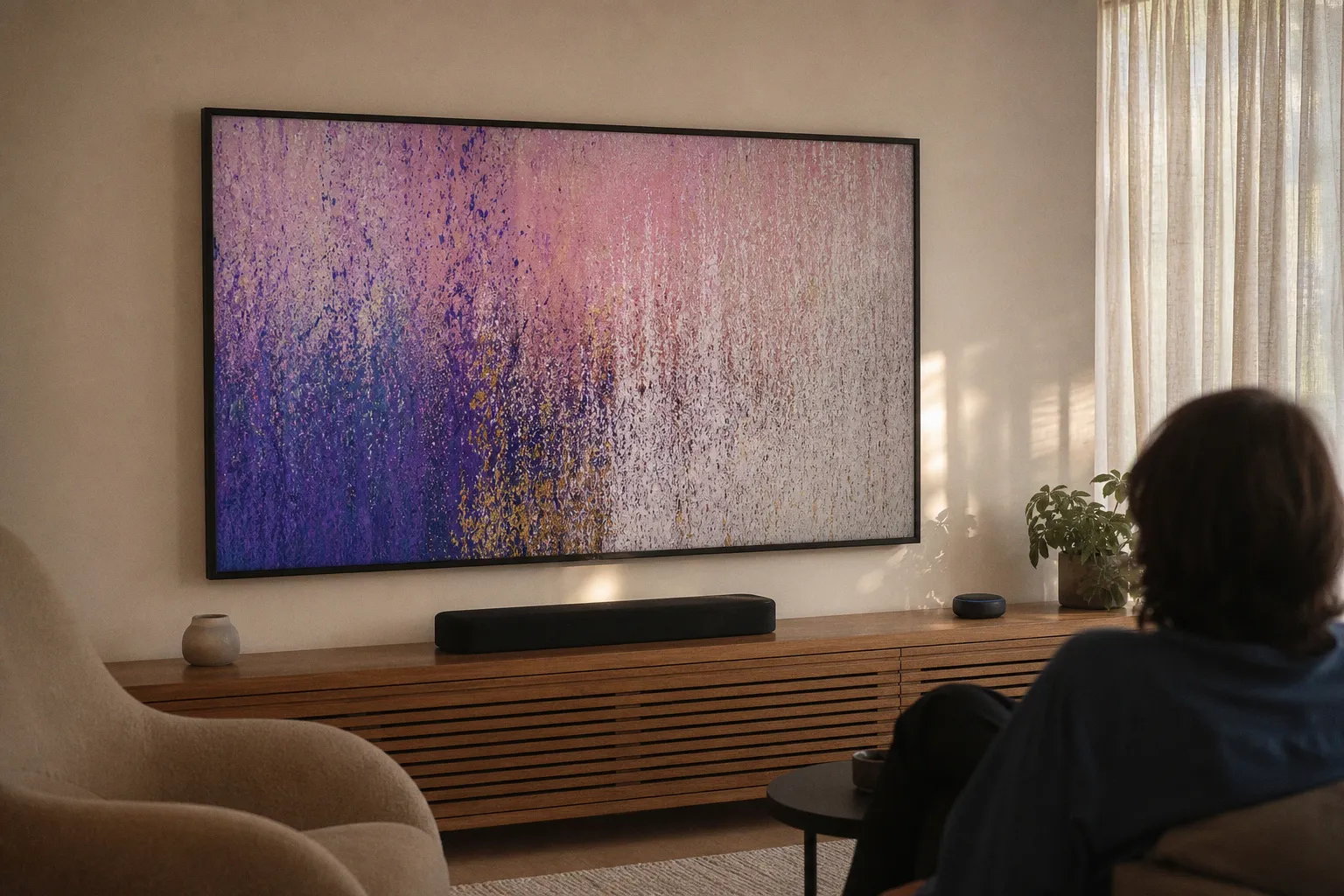
The headline promises a screen that defaults to digital art when idle. No confirmed brand. No price tag. No spec sheet in the snippet. Just the claim that your wall stops being a black mirror and starts being a curated space. In a world where JPEG provenance is a P&L line item, that's a story worth dissecting, not dismissing.
The thesis on the wall
The ambient display category has been quietly building for years, and every screen manufacturer that leans into "art mode" is making the same bet: households treat walls as canvas, not drywall. For collectors holding digital art, that bet is our distribution thesis in hardware form. The content lives on-chain. The screen is the last mile. Or it should be.
Here's the angle most consumer-tech coverage will miss entirely. A TV that defaults to art when idle isn't competing with other TVs — it's competing with the print-on-canvas market, the gallery wall, and frankly, the screensaver your laptop already runs. The question isn't whether people want art on their walls. They do. The question is whether the art on that wall is theirs — pulled from a wallet, authenticated by on-chain provenance — or whether it's a licensed feed from a corporate curator deciding what you get to look at.
That distinction is the entire margin. A screen that pulls from your collection is infrastructure. A screen that serves you someone else's rotation is a stock photo frame with a power cord and a higher price tag.
What I'm tracking
Until a credible announcement surfaces with wallet integration, on-chain verification, or any semblance of collector agency over what hangs on the wall, this is a headline, not a signal. I'll be watching for: which manufacturer actually ships, what the display partnership looks like, and whether any marketplace or protocol gets named in the press material. If the answer is "our curated feed," the cultural premium on this thing collapses and the secondary market — if collectors ever treat these as status objects — prices that in within a week.
In the same news cycle, MSN reports that Coventry approved plans for a new soft play centre in a former digital art gallery space. Read the inverse signal. A physical digital art venue didn't survive, and the walls are getting padded. Gallery infrastructure is fragile. Ambient screens in living rooms are not. One model burns rent. The other scales into every household that ever bought a frame.
The takeaway
File the TV story under watchlist, not conviction. The hardware thesis is real, and the floor for art-display devices is being quietly rebuilt around collectors who actually own the work. But until wallet-native display goes from pitch deck to product page, this is ambient noise with a good headline. The moment it ships with real provenance under the hood, the economics of "owning" digital art shift from speculative holding to actually living with it. And that, more than any floor price on any PFP, is the re-rating worth positioning for.