Why Institutional Collectors Are Betting Big on Immersive Digital Art
Meanwhile, Trend Hunter's latest cluster flags immersive digital exhibitions as a breakout trend, and Mumbai is doubling down on permanent interactive art spaces.
Silas Beckett, On-Chain Critic & Market Columnist·updated July 23, 2026
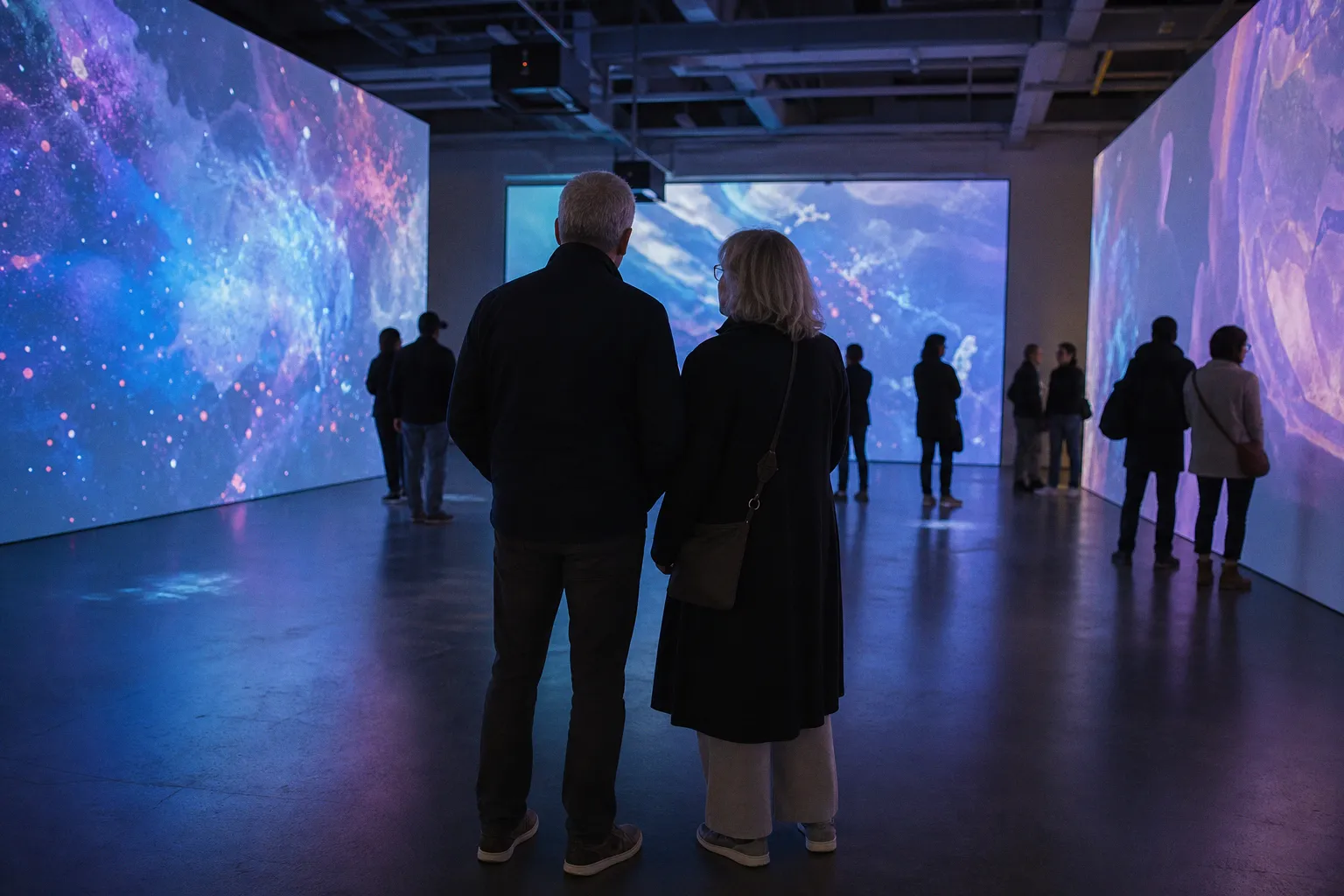
When a 77-year-old billionaire tells a major publication that digital art is now his "favorite genre" to collect, we should at least perk up our ears. Carl Thoma — Dallas-based, foundation-backed, collection spanning Japanese bamboo to Spanish colonial portraiture — made that declaration to Observer, and his foundation's latest exhibition, "Presence of Absence: Embodied Portraiture," is the proof of concept. Meanwhile, Trend Hunter's latest cluster flags immersive digital exhibitions as a breakout trend, and Mumbai is doubling down on permanent interactive art spaces. The signal is getting louder, even if the floor prices aren't reflecting it yet.
Old Money Pivots to Pixels
Let's be precise about what's happening here. The Thoma Foundation, headquartered in Dallas since 2023, mounted its third exhibition concurrent with the Dallas Art Fair this April. The show folds Hito Steyerl and Jeffrey Gibson alongside 18th-century portraiture, separated by a glass wall — past and present in literal dialogue. Carl Thoma's own framing is telling: he's "drawn to where art is going," specifically "experimental, digital, time-based work that's redefining the medium's boundaries."
We've heard variations of this pitch before. But this isn't a Web3 fund recycling talking points. This is a collector whose other passion project is one of the largest Spanish colonial art holdings outside Latin America. When that kind of provenance-chasing capital starts treating digital and time-based art as the natural next chapter, it's worth recalibrating our priors — even if the on-chain PFP market is still grinding through its hangover.
The foundation is already functioning as an institutional pipeline: Meadows Museum and Crow Museum of Asian Art are both showing Thoma pieces this year. Dallas is becoming, as one museum publicist put it, "Thoma Town." Institutional infrastructure follows institutional money. That's the signal.
Immersive Isn't Just a Buzzword — It's Infrastructure
The broader pattern extends well beyond one collector's taste. Trend Hunter's current cluster identifies immersive digital exhibitions as a breakout category. Mumbai alone now hosts multiple permanent immersive and interactive digital art spaces, per Indulge Express. We're watching physical venues commit real estate to exactly the kind of experience that digital artists have been pitching for years — and that NFT metadata was supposed to unlock.
Here's the tension we can't ignore: the cultural premium is migrating toward immersive, experiential, time-based digital work, while much of the on-chain market remains fixated on static PFPs and generative drops chasing the next mint. The two curves are diverging. The venues are catching up to where digital art is actually going, while the market is still pricing yesterday's aesthetic.
That's not necessarily bearish for NFTs as a medium — but it's bearish for anyone banking on cultural relevance without evolving the format.
What We're Watching
The practical takeaway is straightforward. Follow the institutional footprints, not the Discord vibes. The Thoma Foundation's programming — Rauschenberg beside Steyerl, indigenous voices beside postwar Western art — signals that serious curatorial money sees digital and time-based work as culturally significant, not speculative. When that thesis bleeds into more collections and more venues, the artists producing work that belongs in those contexts will see the premium shift.
If you're holding or minting, ask yourself: does this work survive a glass wall next to an 18th-century portrait? That's the bar now. And it's a higher one than most of the market is pricing in.